
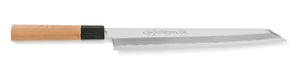
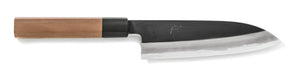
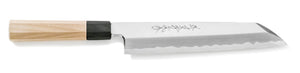
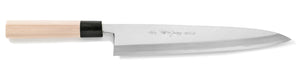
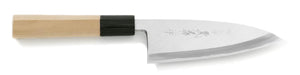
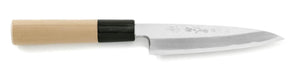
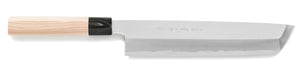
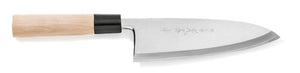
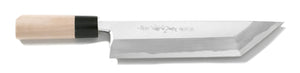
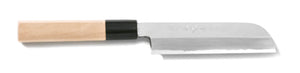
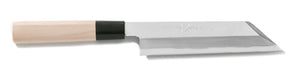

State Of The Knife Industry 2025–2026: What Single-Bevel Knives Do Japanese Chefs Buy?
Welcome to Sakai Ichimonji Mitsuhide's State Of The Knife Industry series, where we dive into our own historical records to reflect on what chefs have purchased over the years, and what they are buying now.
As Volume One of this series, this article will present a deep dive into what Japanese chefs bought in 2025 and 2026 in single-bevel knives, using hard data from our own store.
This article, and other articles to come like this, are designed to give somewhat academically usable statistics and sets that can be referenced and help people around the world understand what knives people are looking for.
Whether you are a chef, restaurant owner, sharpener, artisan, vendor, or someone that is interested in Japanese kitchen knife culture, we hope this article is informative.
Table of Contents
- Who Are We? What Is Our Authority?
- Data Set And Ground Rules
- Caveats And Biases
- Data Set 1: High-Carbon Steel and Stainless Steel
- Data Set 2: Stainless Steel Spread
- Data Set 3: High-Carbon Steel
- Data Set 4: All Steel Spread
- Data Set 5: Deba Knife Spread
- Data Set 6: Yanagiba Spread
- Data Set 7: Usuba Spread
- Data Set 8: Knife Type Spread
- Key Takeaways
- Watch Our YouTube
- How To Cite
Who Are We? What Is Our Authority?
This article is created by Sakai Ichimonji Mitsuhide - a kitchen knife store based in Namba, Osaka.
We were founded back in 1953, and are a third-generation family business specialising in kitchen knife manufacturing, sharpening, retailing, and chef support.
We have sold and made knives for Japanese local chefs for over 70 years, and domestically are well known as a professional outlet for single-bevel, and more recently double-bevel forge-welded knives from Sakai City, Osaka Prefecture.
As a thought leader in the professional kitchen knife sector, Tanaka Ryo (田中 諒) and his team strive to improve and showcase the kitchen knife industry to the world, both protecting and promoting traditional Japanese food and tool culture.
Sakai Ichimonji Mitsuhide has one physical location, which has never moved since its founding. This location is in Dōguyasuji, the kitchenware street of Western Japan. We have made kitchen knives targeted specifically towards Japanese professional chefs for our entire operation, and have not strayed from this vision.
Sakai Ichimonji Mitsuhide also has multiple web locations, such as our global webstore, and domestic Japanese webstore. Our Japanese webstore also exists on other platforms, such as Rakuten and Amazon Japan.
The dataset for this introspection comes from our own sales data, and was gathered by Matsumura Seiya (松村 誠也) from our domestic PR team, with Bradley Jolly (ブラッドリー ジョリー) assisting with data and factchecking, plus penning this article in English.
We hope that the above gives you trust that our authority in the Japanese kitchen knife sector is high, and that our data is reliable.
Data Set And Ground Rules
Diagram i: Sakai Ichimonji Mitsuhie's physical location in Doguyasuji, Namba, Osaka (October 2026)
Our data for this report comes from sales in our physical location by customers identified as Japanese Professional Chefs from January 1, 2025, to August 15, 2026.
In our sales data, we classify our customers under a large variety of subsectors.
The data used in this report comes from sales where the customer has been classified as "Japanese - Professional Chef". This indicates that the customer is Japanese, and works in the professional sector.
This identification occurs in one of two ways.
1. The customer identifies themselves as a professional
2. Our team has determined during the sales transaction that the customer is a professional
This data set does not include sales made via our webstore, as at the time it was impossible for us to properly determine.
This data set does not mean chefs of Japanese cuisine. It means professional chefs who are of Japanese nationality. We point this out because many Japanese chefs practice or operate restaurants in other cuisines, such as French and Italian. They count in this report too.
This report focuses solely on volume of knives sold, instead of money spent on knives. We find this to be a more important vector, as different knives have different price points which can skew the data.
Please note that this data set only discloses percentages, and not exact numbers. We understand that this can still cause obfuscation, but in order to protect business operations, we cannot reveal this data. We hope that as a leading kitchen knife store that the volume is high enough (and we strongly believe it is) that the data speaks for itself in percentages alone.
This data set will cover the following points:
1. High-carbon steel sales against stainless steel sales
2. Stainless steel sales broken down into material subsectors (VG10, SG2, Molybdenum Steel etc.)
3. High-carbon steel sales broken down into material subsectors (Blue Steel 1, Blue Steel 2, White Steel 2 etc.)
4. Deba sales broken down into material subsectors of all steels we sell
5. Deba sales comparing high-carbon steel against stainless steel
6. Yanagiba sales broken down into material subsectors of all steels we sell
7. Yanagiba sales comparing high-carbon steel against stainless steel
8. Usuba sales broken down into material subsectors of all steels we sell
9. Usuba sales comparing high-carbon steel against stainless steel
10. Total sales spread between deba, yanagiba, and usuba
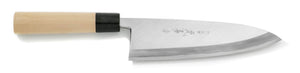
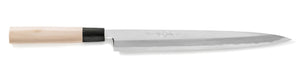
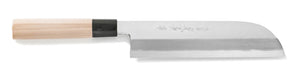
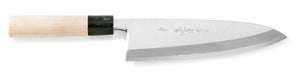
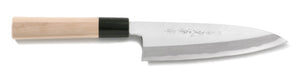
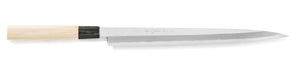
For our reporting, this data set will only consider the three main lines of traditional Japanese kitchen knife:
1. Deba
2. Yanagiba
3. Usuba (Kamagata-type and Edo-type combined)
This data is based on our own product classifications. The knife must classify in our database as either a deba, a yanagiba, or an usuba to be counted for this report. This keeps the knives used in this report as traditional and simple as possible, removing discussion around variation types.
We have chosen to exclude the other types because many of them we only make in a single steel, and this can really skew the reporting and present a less clear image. The three types above we make in a large variety, enough where we feel the data is reliable for a report about them.
Usuba come in two types, Kamagata-style, and Edo-style. Usuba knives will be presented as having both of those combined. This exception is because these two knives are bought somewhat depending on region of residence or training. Both are usuba, however people will tend to buy one or the other, so to paint a full picture we will count them together.
Kiritsuke-style knives (kiritsuke-deba, kiritsuke-yanagiba, and to a lesser extent kenmuki) and sakimaru-style knives are excluded from this report, as while they are different knives and not variations, it is not a regional difference choice, whereas the two usuba knives are. They also are classified differently in our product classifications.
Deba variations such as mioroshi, ai-deba, ajikiri, fugudeba, and funayuki are also excluded from this report as they are classified as different knives in our product classification.
Yanagiba variations such as fuguhiki and takohiki are excluded from this report as they are classified as different knives in our product classification. Unlike usuba where we believe people will buy one over the other, people may buy a yanagiba and a takohiki, so we prefer to keep them out of this reporting. Our range on them is also incredibly limited, and may create outliers which will skew reporting.
All of our data sets will come with a pie chart. The pie chart will always go from highest-to-lowest percentage in a counter-clockwise fashion (right-to-left).
Data is rounded to a maximum of two decimal points, which can cause errors in rounding. Data will be normalized in some instances to keep data hitting a total of 100%.
This report will not separate left-handed and right-handed, or honyaki knives. This means we determine high-carbon and stainless as what the hard steel (hagane) is made of, ignoring the composition of the cladding (jigane).
We understand that stainless steel knives are also high-carbon steel knives, and classify the knives based on whether they also classify as stainless steel (stainless steel) or not (high-carbon steel).
Our data set graphics for this article have been obtained from a video we have released on this subject also, so we ask for your understanding that they are not the same design-wise.
Caveats And Biases
There are some parts of our business which will cause this data to be skewed that cannot be removed.
1. We are a business well known in Japan for our high-carbon steel, single-bevel knives.
2. Our White Steel #1 Montanren line is our flagship line, and some chefs seek us out specifically for that.
3. Some knives we do not make in certain steels, addressed in each section individually.
4. While we do make Powdered High-Speed Tool Steel knives (SG2, SPG STRIX etc.), our range of these is limited.
5. We have discontinued production of knives using some steels, so they will not exist in our reporting. We will disclose when this occurs.
6. Our range of high-carbon steel knives is higher than our stainless steel range.
7. This data is from our one physical location in Osaka, meaning a majority of the chefs we serve are from Osaka and Western Japan.
We ask you keep the above in mind as you read our report.
We again wish to acknowledge that we are aware that the lack of disclosure of precise numbers does diminish the impact and academic usefulness of this report. While we do apologise for this omission, we want you to look at this report less scientifically, despite its numbers, and more under the guise of "This is a report from an old Japanese kitchen knife store with merit that serves the professional Japanese chef community." That said, we believe that the volume of knives sold within this timeframe is more than sufficient to prevent outlier data from skewing the report, and that enough knives were sold for these ratios to be reliable.
This is the largest bias we cannot remove, yet this bias also means that if a different brand or company was to release their results, the overall result itself would likely be very different. Some stores cater to home cooks, some professionals, some local, and some overseas.
If you are seeking knowledge on what Japanese professional chefs specifically are looking for, we feel this report is about as accurate as it could get.
Data Set 1: High-Carbon Steel And Stainless Steel
Data Set 1 displays Sakai Ichimonji Mitsuhide's total single-bevel sales, comparing how many of them were stainless steel versus how many of them were high-carbon steel.
Diagram 1: Percentage of single-bevel knife sales between high-carbon steel and stainless steel
| Steel | Percentage |
| High-Carbon Steel | 73.29% |
| Stainless Steel | 26.71% |
Table 1: Percentage of single-bevel knife sales between high-carbon steel and stainless steel
As shown by Diagram 1 and Table 1 above, 73.29% of all knives sold in this data set were made using high-carbon steel, and 26.71% of all knives sold in this data set were made using stainless steel.
We believe this data to be the case for the following reasons
1. We are very well known for our high-carbon steel knives, and have built that reputation over 70 years.
2. Our store has a very large selection of high-carbon steel knives that is easy to see and hold.
3. Chefs often tell us "We aren't bothered too much about carbon steel, as maintaining it becomes second nature during our training."
4. Japanese chefs value cost-performance
We feel that points 3 and 4 carry more weight here.
With every customer that comes into our store, we always try to enter deep consultation with them, and as a result are able to collect lots of feedback. This feedback continues as each of our kitchen knives comes with a free sharpening ticket, so customers return to us and we can learn more about what they want, what they enjoy, or what they prefer to avoid. Point 3 is a summary of years of that consultation.
We also believe that Japanese chefs truly value a knife that performs well, but is also inexpensive. High-carbon steel knives often cost significantly less than stainless steel ones at the same performance level, so we posit that this heavily impacts the percentages.
Irrespective of any of the above, 73% is a very large ratio in favor of high-carbon steel, so we believe that this data shows that Japanese professional chefs highly prefer to buy high-carbon steel single-bevel knives over stainless steel ones.
Data Set 2: Stainless Steel Spread
Data Set 2 displays Sakai Ichimonji Mitsuhide's total stainless steel single-bevel kitchen knife sales.
Important stainless steels will appear in Table 2, even if they have 0%, to demonstrate that they have not been missed. They will not appear in Diagram 2.
Diagram 2: Percentage of single-bevel knife sales in stainless steel divided into steel type
| Steel | Percentage |
| Molybdenum Steel (AUS-8) | 40.9% |
| Silver Steel #3 (Gingami 3 / Ginsan) | 34.7% |
| VG1 (VKin1) | 20.2% |
| VG10 (VKin10) | 3.49% |
| Super Gold 2 (SG2 / SPG2) | 0.81% |
| Super Gold STRIX (SG STRIX/SPG STRIX) | 0.0% |
Table 2: Percentage of single-bevel knife sales in stainless steel divided into steel type
While we are not talking too much about money spent in this report, we do find it interesting and want to note that despite Silver Steel #3 placing behind Molybdenum Steel in this data set, money spent on Silver Steel #3 knives was higher. There is a very strong image that Japanese chefs use Silver Steel #3 because of its association with Sakai knifesmithing, and this data does still reflect that in some ways.
We speculate that Molybdenum Steel placed first for the following reasons
1. It is affordable
2. It offers good rust resistance
3. It is softer than the other steels, making it easier to maintain in professional settings
4. The cost-performance friendly nature allows for people to expand their collection easily
We speculate that Silver Steel #3 placed second for the following reasons
1. We offer two lines of it (Regular and Hakugin)
2. Our lines are mid-range and high-end in this series, so people more particular about their choices may go for this option
Due to the above, we can partially infer that people may use Silver Steel #3 for their main knife, and expand into molybdenum steel knives to balance out their collection, such as buying knives of different lengths, or certain knives that cost more, which we will discuss in other data sets, particularly Data Set 5.
We speculate that VG1 placed third because this is our only option available with a Western-style comfort grip, as part of our G-LINE series. We are also quite well known for our G-LINE series in professional settings, so these two biases help push it up the chart. Not all chefs want to use a wa-handle, but may still need a single-sided knife, so they will go with this. We do not currently offer the G-LINE as an usuba though, so we think it is impressive that is still rates this highly. We also believe that western-style handled single-bevel knives may appear in restaurants of non-Japanese cuisine, such as French or Italian. Those chefs may have trained with comfort-style grips instead, which may convince them more to look at this option.
We do carry VG10 single-bevel knives, including honyaki variants, but the data still shows it as only selling 3.49%. We posit that this is because the steel has a higher cost than Silver Steel #3. We do want to remind people here that VG10 does still make for good single-bevel knives, as they can be used well even if performance drops somewhat.
The most interesting statistic here is Super Gold 2, placing last at 0.81%. We posit this is for the following reasons
1. It is significantly more expensive than the other steels to reach a knife of the same performance level
2. It takes an incredibly long time to sharpen
3. The higher hardness makes these knives chip more often
All of the above three points run counter to what Japanese professional chefs need - an inexpensive knife that is easy to maintain and cuts well. Super Gold 2 knives can and do hold an incredibly keen edge, but fixing that edge takes a lot of time, and can be disastrous if sharpness loss occurs mid-shift.
We do want to mention that Super Gold 2 knives are still great knives, as are knives made using other steels like SPG STRIX (we currently do not make any single-bevel knives using this steel), but it is a steel we think that is more popular with collectors and enthusiasts over professionals.
We also find this interesting because our Japanese audience does not buy Super Gold 2 knives often, but our overseas audience buys them in significantly greater margins. That is outside the scope of this report, but we will consider making reports that include that data in the future, depending on the impact of this report.
Data Set 3: High-Carbon Steel Spread
Data Set 3 displays Sakai Ichimonji Mitsuhide's total high-carbon steel single-bevel kitchen knife sales.
Important carbon steels will appear in Table 3, even if they have 0%, to demonstrate that they have not been missed. They will not appear in Diagram 3
Diagram 3: Percentage of single-bevel knife sales in high-carbon steel divided into steel type
| Steel | Percentage |
| White Steel #2 (Shirogami 2) | 57.6% |
| Blue Steel #2 (Aogami 2) | 15.5% |
| White Steel #1 (Shirogami 1) | 12.4% |
| Blue Steel #1 (Aogami 1) | 7.93% |
| SK4 Steel | 5.09% |
| Yellow Steel #2 (Kigami 2) | 1.47% |
| Blue Steel Super (Aogami Super) | 0.00% |
| White Steel #3 (Shirogami 3) | 0.00% |
Table 3: Percentage of single-bevel knife sales in high-carbon steel divided into steel type
Combining some steels gives extra information on the above.
Based on Table 3, combining White Steels gives a total of 70%, and combining Blue Steels gives a total of 23.43%
We have listed White Steel #3 and Blue Steel Super as 0% as we do not currently make single-bevel knives using these steels. This is because White Steel #2 has become so cost effective that we feel that White Steel #3 has less of a professional need, and Blue Steel Super is only made by a small amount of artisans, and from our own experience over the years we have discovered that it is not as much of a popular steel with Japanese professionals due to its difficulty in re-sharpening. Like Super Gold 2 which we discussed in Data Set 2, we think that Blue Steel Super is more popular with collectors and enthusiasts.
We do acknowledge however that Blue Steel Super is more popular with our overseas audience, but that is outside the scope of this report. We do make a small range of Blue Steel Super knives in double-bevel steel, like we do with SPG STRIX, again talked about in Data Set 2.
We posit that White Steel #2 placed first for the following reasons
1. It is incredibly cost-performance friendly
2. It is easy to sharpen
3. We see it used by younger chefs, competitive chefs, and veterans alike
For us, we see White Steel #2 as the golden standard amongst professional chefs, including with veterans who have likely used knives with many steels over their careers, returning to White Steel #2 in the end. We want to stress here that White Steel #2 is over half of this statistic, so the difference in sales volume of knives using this steel is massive compared to the others. Logically, if you combined all the other steels, White Steel #2 would still outperform them.
We posit that Blue Steel #2 placed second for the following reasons
1. It offers good edge retention and is still easy to sharpen
2. It is more appropriate for use in smaller commercial settings
3. It offers slightly improved rust resistance
We find that people who are slightly worried about edge retention will go to Blue Steel #2 over White Steel #2. We also think that the rust resistance plays a factor, as smaller commercial settings can sometimes mean that knives are left alone for longer, especially in one-person or two-person operations. The price difference between White Steel #2 and Blue Steel #2 is not too large either, making it a very suitable option.
We posit that White Steel #1 placed third for the following reasons
1. Very few stores sell knives using White Steel #1
2. Very few artisans make knives using White Steel #1
3. We are known for our White Steel #1 line
4. It offers premium kireaji in a cost-performance friendly way
Many chefs come to us saying that our White Steel #1 Montanren series offers the best cutting experience they have ever used, and this series does have lots of fans, including in our double-bevel variants. However, the lack of rust resistance makes it not always suitable, and despite this fame and high-end performance and lack of availability outside our brand, it is still outshone heavily by White Steel #2. White Steel #1 also does have a higher chipping risk due to its hardness, making it less appropriate for professionals in certain knife types like deba knives.
Slightly more anecdotally, we have had chefs tell us that they often buy White Steel #1 double-bevel knives instead as they like how red meat tastes when cutting it, so chefs may use other steels for single-bevel as a result.
We posit that Blue Steel #1 placed fourth for the following reasons
1. It is more expensive
2. It has a higher risk of chipping
3. It offers the best edge retention in our line of products, but takes a long time to sharpen
We believe that Blue Steel #1 knives have a very specific audience in the professional sector that they meet - hotel and mass production systems like catering. When you have to prepare a very large amount of food in a day, the high edge retention that Blue Steel #1 provides allows the chef to do this without spending time on their stone mid-shift. The key reason people buy Blue Steel #1 knives is edge retention on top of the hardness and cutting ability it has. This does cause the price to rise significantly though, so the cost-performance benefit is lost. Blue Steel #1 also has the highest chipping risk, making it less suitable for deba and usuba knives.
SK4 and Yellow Steel 2 both offer extreme cost effectiveness and ease of sharpening, but their edge retention is comparatively very low, and perhaps too low to be used professionally. Combining them makes 6.56%, which would still be last place. There is a caveat here to keep in mind though. Our Yellow Steel #2 line has been discontinued for some time, and is largely only available now in left-handed models. Our SK4 line though is in active production, and we feel that people would buy those interchangeably, so it can be worth looking at them as a combined statistic.
The largest takeaway from this data set is that 1 in every 2 high-carbon steel single-bevel knives bought by Japanese professionals uses White Steel #2, and over 2 in every 3 use White Steel in general
Data Set 4: All Steel Spread
Data Set 4 displays Sakai Ichimonji Mitsuhide's total single-bevel knife sales divided into all supported steel types.
Diagram 4: Percentage of all single-bevel knife sales divided into steel type
| Steel | Percentage |
| White Steel #2 (Shirogami 2) | 42.2% |
| Blue Steel #2 (Aogami 2) | 11.3% |
| Molybdenum Steel (AUS-8) | 10.9% |
| Silver Steel #3 (Gingami 3 / Ginsan) | 9.26% |
| White Steel #1 (Shirogami 1) | 9.12% |
| Blue Steel #1 (Aogami 1) | 5.81% |
| VG1 (VKin1) | 5.38% |
| SK4 | 3.73% |
| Yellow Steel #2 (Kigami 2) | 1.08% |
| VG10 (VKin10) | 0.93% |
| Super Gold 2 (SG2 / SPG2) | 0.22% |
Table 4: Percentage of all single-bevel knife sales divided into steel type
If we combine steels, White Steel alone counts for 51.32%, so one in every two knives sold is still made using White Steel, with an overwhelmingly large amount of that attributed to White Steel #2 sales, making White Steel #2 the most common choice for professional chefs by over thirty percentage points.
In a sense this is a combination of Data Sets 2 and 3, so there is not much further information to add here, but it is interesting to note that there are still two stainless steels in the top five positions - Molybdenum Steel, and Silver Steel #3. These still outperform White Steel #1, a steel we are quite famous for, showing their penetration into the professional sector.
Data Set 5: Deba Knife Spread
Data Set 5 displays Sakai Ichimonji Mitsuhide's total single-bevel deba sales divided into all supported steel types.
This data set will include all steels presented in Data Set 4, including steels that have zero sales attributed to them. We will explain these zero percent sales in all situations. Comparisons are all against Data Set 4 values.
Diagram 5: Percentage of all single-bevel knife deba sales divided into steel type
| Steel | Percentage | Comparison | Position |
| White Steel #2 (Shirogami 2) | 36.6% | - 5.6 pp | Unchanged |
| Molybdenum Steel (AUS-8) | 18.2% | + 7.3 pp | Up 1 |
| Blue Steel #2 (Aogami 2) | 14.8% | + 3.5 pp | Down 1 |
| White Steel #1 (Shirogami 1) | 10.2% | + 1.08 pp | Up 1 |
| VG1 (VKin1) | 9.66% | + 4.28 pp | Up 2 |
| Silver Steel #3 (Gingami 3 / Ginsan) | 5.4% | - 3.86 pp | Down 2 |
| Blue Steel #1 (Aogami 1) | 2.84% | - 2.97 pp | Down 1 |
| Yellow Steel #2 (Kigami 2) | 1.7% | + 0.62 pp | Up 1 |
| SK4 | 0.56% | - 3.17 pp | Down 1 |
| VG10 (VKin10) | 0.00% | - 0.93 pp | N/A |
| Super Gold 2 (SG2 / SPG2) | 0.00% | - 0.22 pp | N/A |
Table 5: Percentage of all single-bevel knife deba sales divided into steel type
We noticed some variance between the deba spread and what is presented in Data Set 4.
White Steel #2 performed approximately six percentage points lower, whereas Molybdenum Steel performed approximately seven percentage points higher. Other steels stayed within a five percentage point variance.
Other positions changed in the data above, and we believe this is for the following. All statements will be in comparison against Data Set 4.
1. Deba knives are used for heavier work, which increases the risk of chipping, and as a result Blue Steel #2 sales went up and Blue Steel #1 sales went down.
2. Molybdenum Steel and VG1 sales absorbed sales from other steels as the deba has expanded outside of traditional Japanese cuisine
3. More inexpensive steels sell better in this category
Point 1 seems logical, as the work deba knives handle often involves bones and harder substances, so fragile steels are more avoided.
Point 2 we find most interesting, as other cuisines need to break down firm ingredients as well, plus there is Western-style handle accessibility. As a softer steel can be important for deba longevity, we think that Molybdenum Steel took sales from White Steel #2 for the most part, whereas VG1 was bought by those seeking a Western-style handle specifically.
Point 3 boils things down to price. Deba knives use a lot of steel, so less expensive steels will have more popularity here, and higher-cost steels like Silver Steel #3 and Blue Steel #1 will not perform as well. An interesting outlier is White Steel #1, as it is a harder steel, but still has pliability and is not too expensive, so it is a surprise to see that in the deba category its sales are higher. This outlier is further explained in Data Set 8.
We do not make single-bevel deba knives in VG10 or in Super Gold 2, so they show zero sales.
This data set also allows us to measure high-carbon steel against stainless steel in each category, presented in Diagram 5a below.
Diagram 5a: Percentage of single-bevel deba knife sales between high-carbon steel and stainless steel
| Steel | Percentage | Comparison |
| High-Carbon Steel | 66.73% | - 6.56 pp |
| Stainless Steel | 33.27% | + 6.56 pp |
Table 5a: Percentage of single-bevel deba knife sales between high-carbon steel and stainless steel
Deba knife sales see a 6.56 percentage point swing towards stainless steel knives, so we posit that stainless steel knives, while still less popular than high-carbon steel knives, do sell in higher amounts when it comes to deba knives.
As Molybdenum Steel and VG1 deba knives make up over ten percentage points of this difference, we think this may be because of the expansion of the deba into non-Japanese cuisines.
Another way to look at this statistic is that approximately 1 in every 3 deba knives sold is made of stainless steel.
Data Set 6: Yanagiba Knife Spread
Data Set 6 displays Sakai Ichimonji Mitsuhide's total single-bevel yanagiba sales divided into all supported steel types. Comparisons are all against Data Set 4 values.
Diagram 6: Percentage of all single-bevel knife yanagiba sales divided into steel type
| Steel | Percentage | Comparison | Position |
| White Steel #2 (Shirogami 2) | 38.6% | - 3.6 pp | Unchanged |
| White Steel #1 (Shirogami 1) | 16.1% | + 6.98 pp | Up 3 |
| Blue Steel #1 (Aogami 1) | 10.2% | + 4.39 pp | Up 3 |
| Silver Steel #3 (Gingami 3 / Ginsan) | 9.26% | 0.00 pp | Unchanged |
| Blue Steel #2 (Aogami 2) | 7.57% | - 3.73 pp | Down 3 |
| Molybdenum Steel (AUS-8) | 7.43% | - 3.47 pp | Down 3 |
| SK4 | 5.19% | + 1.46 pp | Up 1 |
| VG1 (VKin1) | 3.23% | -2.15 pp | Down 1 |
| VG10 (VKin10) | 1.12% | + 0.19 pp | Up 1 |
| Yellow Steel #2 (Kigami 2) | 0.84% | - 0.24 pp | Down 1 |
| Super Gold 2 (SG2 / SPG2) | 0.42% | + 0.20 pp | Unchanged |
Table 6: Percentage of all single-bevel knife yanagiba sales divided into steel type
Combining White Steels again raises the number over fifty percent, reaching 54.7%, higher than the 51.32% combined stat presented in Data Set 4.
Both Blue Steel #1 and White Steel #1 perform very well in this category, representing a total swing of 11.37 percentage points, because yanagiba knives require a very precise sharpness and kireaji that those steels provide. Slicing sashimi is less destructive to your knife compared to the tasks usuba and deba are used for and their respective blade thicknesses, so unlike in Data Set 5 where we saw Blue Steel #2 do well, conversely we see Blue Steel #1 and White Steel #1 do amazingly well.
From this, we can posit that when it comes to yanagiba knives, Japanese chefs prefer knives with very high kireaji, or knives that have a combination of high kireaji and extreme edge retention.
Regarding the secondary statistic in Ginsan, this was to correct an audio error found in the video version of this article. The true figure is 9.26% as stated.
Diagram 6a below presents the high-carbon and stainless spread in this data set.
Diagram 6a: Percentage of single-bevel yanagiba knife sales between high-carbon steel and stainless steel
| Steel | Percentage | Comparison |
| High-Carbon Steel | 78.53% | + 5.24 pp |
| Stainless Steel | 21.47% | - 5.24 pp |
Table 6a: Percentage of single-bevel yanagiba knife sales between high-carbon steel and stainless steel
Diagram and Table 6a show that yanagiba knives sell more closely to the ratio shown in Data Set 1, indicating that there are fewer outliers here, but also that yanagiba sales outrank the others, which will be displayed in Data Set 8.
Nevertheless, approximately one in every five yanagiba sold is made using stainless steel, so it is still an important steel type to make yanagiba knives in. We agree with this, which is why it is the one category here we sell knives using Super Gold 2 in as part of our Kirameki line.
Data Set 7: Usuba Knife Spread
Data Set 7 displays Sakai Ichimonji Mitsuhide's total single-bevel usuba sales divided into all supported steel types.
This data set will include all steels presented in Data Set 4, including steels that have zero sales attributed to them. We will explain these zero percent sales in all situations. Comparisons are all against Data Set 4 values.
Diagram 7: Percentage of all single-bevel knife usuba sales divided into steel type
| Steel | Percentage | Comparison | Position |
| White Steel #2 (Shirogami 2) | 45.7% | + 3.5 pp | Unchanged |
| Blue Steel #2 (Aogami 2) | 23.4% | + 12.1 pp | Unchanged |
| White Steel #1 (Shirogami 1) | 9.24% | + 0.12 pp | Up 2 |
| SK4 | 7.07% | + 3.34 pp | Up 4 |
| Blue Steel #1 (Aogami 1) | 5.98% | + 0.17 pp | Up 1 |
| Silver Steel #3 (Gingami 3 / Ginsan) | 3.8% | - 5.46 pp | Down 2 |
| Molybdenum Steel (AUS-8) | 2.17% | - 8.73 pp | Down 4 |
| Yellow Steel #2 | 1.63% | + 0.55 pp | Up 1 |
| VG10 (VKin10) | 1.09% | + 0.16 pp | Up 1 |
| VG1 (VKin1) | 0.00% | - 5.38 pp | N/A |
| Super Gold 2 (SG2 / SPG2) | 0.00% | - 0.22 pp | N/A |
Table 7: Percentage of all single-bevel knife usuba sales divided into steel type
We believe Data Set 7 shows some of the most interesting swings and data points.
Firstly, this is the only data set where White Steel #2 has an upwards swing, showing that an already popular steel is even more popular in this category.
Blue Steel #2 also shows the largest swing and only double digit swing in these data sets, increasing by 12.1 percentage points, over double the percentage found in Data Set 4.
Overall, every single high-carbon steel shows an upwards swing here, including SK4 steel with its highest placement.
Conversely, almost all stainless steels swing negatively here, with the sole exception being VG10 increasing by 0.16 percentage points. Molybdenum steel in particular suffers the largest negative swing across all shared data sets, losing 8.73 percentage points.
The most fascinating stat here is the extreme control of the top three placements. Combining them, they account for 78.34%, so over three in four usuba knives are sold made of those three steels alone.
This is also the only category where only two steel types sell at a percentage over 10%, and the only category where more than one type sells above 20%.
We posit this is for the following reasons
1. Usuba, unlike the other two knives, have not left the realm of Japanese cuisine. Many restaurants also happen to slice sashimi, and deba are used for various heavy work now, but usuba knives are very strict in purpose and incredibly difficult to use and sharpen, keeping them in the realm of Japanese cuisine
2. Usuba knives have an incredibly thin blade, so softer high-carbon steels perform very well due to a smaller chipping risk
3. Usuba require extremely high kireaji to make the most of, so high-carbon steels overall perform well. This may explain the downwards swing of Molybdenum Steel.
4. Usuba knives are difficult to sharpen, so knives that are easier to sharpen show increased swings, such as White Steel #2, Blue Steel #2, and SK4. This may also be why Silver Steel #3 shows a downwards swing.
We discontinued our VG1 usuba a long time ago, and do not make usuba in Super Gold 2, hence why they are listed as 0.00%.
Diagram 7a below shows the high-carbon steel to stainless steel spread between usuba knives.
Diagram 7a: Percentage of single-bevel usuba knife sales between high-carbon steel and stainless steel
| Steel | Percentage | Comparison |
| High-Carbon Steel | 92.95% | + 19.66 pp |
| Stainless Steel | 7.05% | - 19.66 pp |
Table 7a: Percentage of single-bevel usuba knife sales between high-carbon steel and stainless steel
Diagram and Table 7a demonstrate that an already high ratio can be taken further, with high-carbon steel knives overwhelmingly dominating what chefs buy.
To further demonstrate this point, approximately one in thirteen to fourteen usuba bought by Japanese professional chefs is made of stainless steel. When deba knives are one in three as presented in Diagram and Table 5a, you can see this is an extreme difference.
This further reinforces our point that we believe usuba have not really left traditional Japanese cuisine.
Japanese chefs dominantly purchase high-carbon steel knives when they are looking for usuba knives.
Data Set 8: Knife Type Spread
Data Set 8 looks at our knife sales from a different perspective, showing out of all of our data, precisely what percentage of them was deba, yanagiba, and usuba.
Diagram 8: Percentage of total single-bevel knife sales broken down into the three main knife categories used in this report
| Knife Type | Percentage |
| Yanagiba Knives | 57.1% |
| Deba Knives | 28.2% |
| Usuba Knives | 14.7% |
Table 8: Percentage of total single-bevel knife sales broken down into the three main knife categories used in this report
As Diagram and Table 8 demonstrate, yanagiba knives alone sell more than the other two categories combined.
We posit this is for the following reasons
1. People buy multiple yanagiba of different lengths
2. People do not buy extra deba or usuba for their collections at home, simply using their work tools
3. Usuba are only used in a few restaurants, and have not left the realm of traditional Japanese cuisine
4. Restaurants outside of Japanese cuisine still serve sashimi, and need a way to slice it
5. Deba knives are used for heavier work outside of Japanese cuisine
Price can also play a part in this as well, keeping in mind that overall, yanagiba are likely to use less steel, keeping costs down.
Key Takeaways
Our reporting has opened a large amount of interesting points to talk about, but we will boil it down to a few key takeaways here.
Japanese professional chefs overwhelmingly buy White Steel #2 as their steel of choice across all major single-bevel categories.
Japanese chefs will consider stainless steel for their deba knives more often.
Conversely, Japanese chefs will rarely consider stainless steel for their usuba knives.
Super Gold 2 is not popular with Japanese chefs.
Approximately one in four knives bought by Japanese professional chefs use stainless steel.
There is a market for Western-style single-bevel knives.
And finally, Japanese chefs will lean towards knives with higher hardness levels and edge retention when it comes to yanagiba knives, and less so when it comes to deba and usuba knives.
Watch Our YouTube
We have also created a version of this report on YouTube, which discusses some other more unique nuances that felt less required in this more academic-focused reporting.
This data collection style reporting takes a lot of work from many team members, and the best way to support this work is by watching the YouTube video, and subscribing to the channel there.
How To Cite
Citation references can be found below in APA 7th.
Jolly, B., & Matsumura, S. (2026). State of the knife industry 2025–2026: What single-bevel knives do Japanese chefs buy? Sakai Ichimonji Mitsuhide. https://global.ichimonji.co.jp/blogs/a-craftsmans-eyes-view/state-of-the-knife-industry-2025-2026-what-single-bevel-knives-do-japanese-chefs-buy